Parti libéral
Illusions perduesThe Parti libéral is a political opposition whose power in the novel is exercised chiefly through the press: its newspapers can direct suspicion toward the government, shape public argument, and make political conflict visible as a contest over readers and reputation. Yet this power is precarious. Partisan campaigns provoke retaliation, sharpen hostility between writers, and can turn a journalist’s political alignment into a liability when the balance of the press shifts.
Political Position and Public Argument
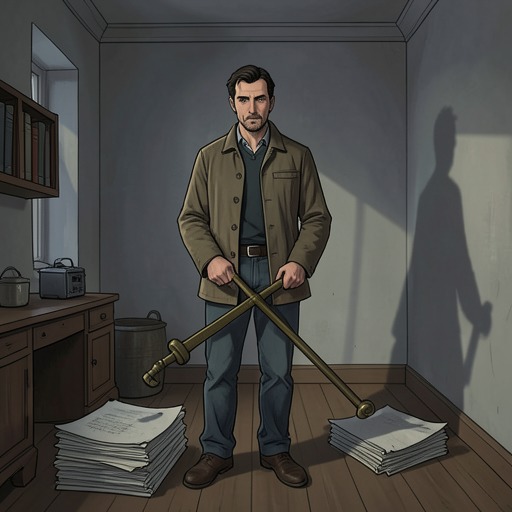
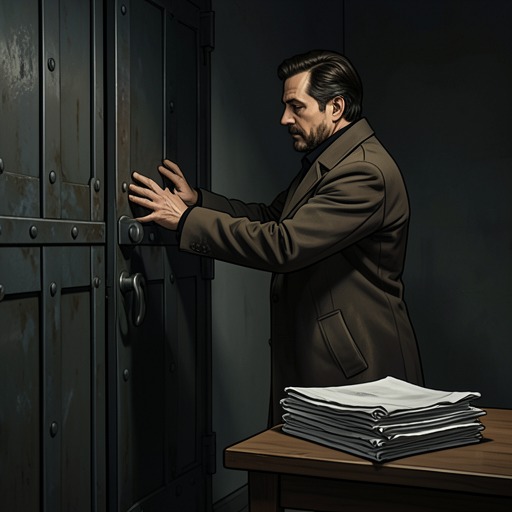
The Parti libéral appears in the novel as the opposition to the government and the court, but the evidence gives it no formal constitution, membership rules, or stable internal structure. It is better understood here as a political camp whose public influence is mediated by newspapers and polemics. At a dinner attended by journalists and publishers, Finot describes the opposition as having little to say against the government at that moment and proposes a paid pamphlet demanding restoration of the right of primogeniture. The intended effect is not simply to argue for that policy: the pamphlet is meant to provoke the public to suspect secret designs at court. Félicien Vernou is assigned to write it, and Dauriat is to publish it without revealing the arrangement.
This episode makes political writing appear at once ideological and instrumental. A pamphlet can take a position that a writer claims to share, as Hector Merlin initially does, or it can be commissioned as a device for creating controversy. Finot rejects Merlin’s offer and gives the assignment to Vernou, treating the work as part of a coordinated press maneuver. The scene does not establish that the Parti libéral itself formally directs the scheme; rather, it shows how journalists and publishers can manufacture arguments in its political arena and use public reaction as a weapon against the government.
The Press as Political Power
The novel presents newspapers as an unusually powerful but asymmetrically exposed political force. Finot argues that if the ministry enters the arena of public controversy, journalists can drive the dispute and turn a government’s response against it; the newspaper, by contrast, risks less than the power it attacks. Claude Vignon’s response underscores the danger he sees in this arrangement: the press is acquiring influence over the direction of ideas without the unity or fixed discipline that would make it a coherent political institution.
That imbalance helps explain why partisan writing matters beyond the immediate success of any single article. In the debate over royalist newspapers, Léon Giraud describes their founding as retaliation for the liberal press’s calumnies, insults, and raillery. He warns Lucien de Rubempré that the new campaign will answer injury with injury. Because subscribers are said to be predominantly on the Left, however, he expects that the larger readership may determine which side appears victorious. The same practices of invective can make one camp seem disreputable while allowing its opponents to present themselves as defenders of the country, even if those opponents are no less hypocritical or perfidious.
Giraud’s warning identifies a consequence that reaches beyond the immediate quarrel: mutual abuse can normalize personal attack as a public right. In his account, the press does not merely reflect political division; reciprocal campaigns help authorize increasingly hostile conduct. The novel therefore connects the Parti libéral’s capacity to influence opinion with a cost: the more the press uses insinuation and insult as ordinary political tools, the easier it becomes to justify restrictions on publication and to deepen public suspicion of political opponents.
Partisan Hostility and Writers’ Allegiances
The political camps are depicted as socially divisive as well as rhetorically opposed. The narrator contrasts a later, more accommodating literary camaraderie with an earlier period in which Royalists and Liberals could meet at a theater amid hostile provocations and looks charged with the threat of violence. Political division runs alongside the quarrel between Romantics and Classicists; the two rivalries are described as forms of a comparable hatred. This parallel makes the press conflict part of a broader culture of faction, in which literary and political identities reinforce each other.
Lucien’s own changing allegiance brings the consequences into individual focus. He begins as a liberal and a committed Voltairian, then becomes an ardent Royalist and Romantic. That reversal does not secure him from attack. Instead, his new position places him under the hostility of the liberal press, which associates him with Martinville, the man who supports and loves him. The friendship, whether genuine or merely alleged by others, becomes material for damaging articles, and the pairing intensifies the attacks on both men.
The narrator presents this treatment as an example of the ingratitude shown to political stars: a camp may abandon the people it once helped elevate, while a young writer’s perceived success makes him a target. Lucien’s shift of allegiance thus shows the instability of political belonging in the novel. The Parti libéral matters not as a fully described bureaucracy, but as a force whose newspapers can punish a former ally and turn association, reputation, and public success into weapons.
Limits and Significance
The Parti libéral’s influence is inseparable from the vulnerabilities of the press system through which it acts. Political argument can be commissioned, concealed, and aimed at provoking a response; public support can magnify a campaign, but it can also leave a writer exposed when readership and factional loyalties turn against him. The novel’s depiction does not reduce the conflict to a simple contest between a virtuous opposition and its enemies. It emphasizes reciprocal reprisals, strategic polemic, and the ease with which personal hostility becomes public argument.
The organization’s significance therefore lies in its double position: it is an opposition camp capable of shaping political debate, yet its reach depends on a press whose methods can corrode the distinction between argument and attack. The warning that retaliation legitimizes reciprocal abuse, together with Lucien’s passage from liberalism into Royalism and the consequences of his association with Martinville, reveals how the press can make political identity both an instrument of influence and a source of danger.